Feature Creep on the Reels: Why Slot Developers Keep Piling On the Bells and Whistles

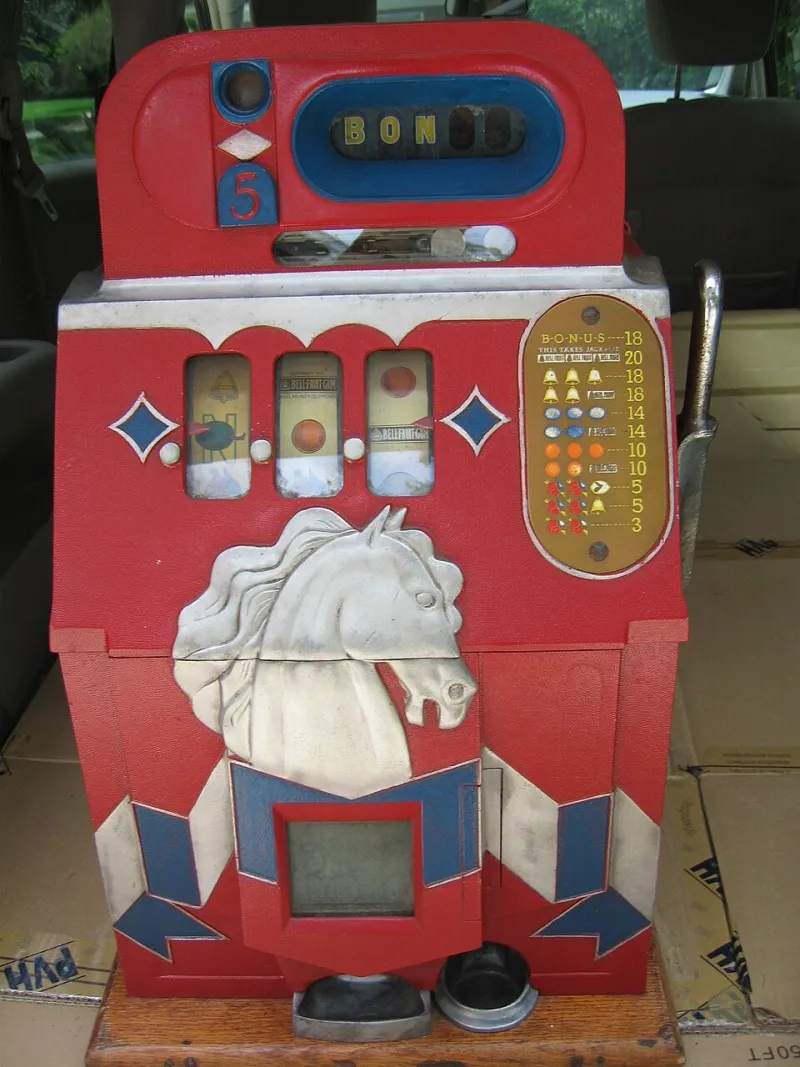
There was a time when a slot machine was a pretty simple proposition. Three reels, a handful of symbols, maybe a wild card thrown in to keep things spicy. You knew what you were getting into. Fast forward to today, and launching a new slot game at FafaSeLoT feels less like pulling a lever and more like booting up a AAA video game — complete with multi-stage bonus rounds, cascading grid mechanics, expanding wilds that morph into different symbols, and lore-driven storylines that could fill a Wikipedia page.
So what happened? The short answer: competition. The longer answer is a whole lot more interesting.
When "Good Enough" Stopped Being Enough
The online casino market in the US has exploded over the past several years. Legal online gambling has expanded across more states, player bases have grown, and the number of studios cranking out new slot titles has multiplied right alongside them. When a digital casino lobby might offer hundreds — sometimes thousands — of games, developers face a brutal reality: if your game doesn't hook someone in the first thirty seconds, they're already clicking over to the next one.
That pressure has fueled what insiders sometimes call feature escalation. Every new release needs something the last one didn't have. A cascading reel mechanic here, a tumbling grid there. Then someone introduces a "buy bonus" feature. Then multiplier trails. Then a second-screen bonus game with its own internal economy. The cycle feeds itself because once players have experienced a certain level of complexity, simpler games start to feel flat by comparison.
It's the same phenomenon you see in action movies — once audiences got used to a certain level of spectacle, going back to something quieter felt like a step down, even if the quieter thing was technically more refined.
The Mechanics That Started the Escalation
A few key innovations really kicked this cycle into high gear. Cascading reels — where winning symbols disappear and new ones fall in to potentially create chain reactions — changed the feel of a spin from a single event into a mini-narrative. Suddenly a spin wasn't over when the reels stopped; it might keep going through four or five cascades, each one building tension.
From there, developers started layering in multipliers that grew with each cascade, then sticky wilds that hung around across multiple drops, then "mega symbols" that could cover entire sections of the grid. Companies like NetEnt, Pragmatic Play, and Hacksaw Gaming began releasing titles where understanding the full paytable required genuine study. Some games ship with tutorial modes because the mechanics are legitimately that involved.
The "buy bonus" feature deserves its own mention. Allowing players to skip straight to the free spins round by paying a premium upfront was a genuine inflection point. It reframed the base game from the main event into something players were actively trying to bypass — which says a lot about how the incentive structure had shifted.
More Features, Better Game? Not Always
Here's where it gets complicated. Not every layer of complexity is created equal. Some mechanics genuinely add depth and replayability. A well-designed multi-stage bonus that builds toward a climactic jackpot moment can be legitimately thrilling — the kind of thing you'll talk about with your casino crew for days afterward. Those designs earn their complexity.
But plenty of feature-heavy slots are essentially just noisy. They throw visual effects, animations, and peripheral mechanics at you in a way that feels less like thoughtful design and more like a distraction strategy. The core math — the RTP, the variance, the actual probability of meaningful wins — hasn't changed. What's changed is the wrapping paper.
Research in behavioral psychology has consistently shown that complex, stimulating environments can make it harder for people to accurately track time and money spent. When you're watching a cascade chain fire off five times in a row with escalating sound effects and a multiplier counter ticking upward, you're genuinely cognitively occupied. That occupied state isn't neutral — it tends to compress your sense of how long you've been playing and how much you've wagered.
Developers know this. It's not necessarily sinister — entertainment is supposed to be engaging — but it's worth keeping in your back pocket as a player.
The Expectation Ratchet
One of the sneakier downstream effects of feature escalation is what it does to player expectations over time. Once you've played a slot with a six-stage progressive bonus that culminates in a multiplied free spins round with sticky expanding wilds, a straightforward three-reel game starts to feel almost boring. The baseline for "exciting" has shifted.
This creates a feedback loop that benefits developers commercially but can work against players personally. When simpler, often higher-RTP games feel unsatisfying, players gravitate toward the flashier options — which frequently come with higher volatility and more complex bonus structures that can be harder to parse. The search for the next big thrill can quietly push your bankroll in directions you didn't plan for.
It also means developers are under constant pressure to keep innovating, which drives up production costs and, indirectly, shapes the economics of the games themselves.
Playing It Smart in a Feature-Heavy World
None of this means you should avoid complex slot games — some of them are genuinely fantastic, and half the fun of online gaming is exploring what's new. But a little awareness goes a long way.
Before you dive into a feature-heavy title, it's worth checking the actual RTP and variance figures rather than just vibing with the spectacle. A game that looks stunning but runs at 94% RTP is a different proposition than a simpler game at 96.5%. The bells and whistles don't change the underlying math.
It's also worth occasionally revisiting some of the less flashy classics in a casino library. Sometimes a clean, well-designed game with straightforward mechanics is exactly what a play session needs — and you might find your bankroll lasts a lot longer without all the feature-triggered excitement pushing your bets upward.
The slot machine arms race isn't going anywhere. If anything, as technology improves — better graphics engines, more sophisticated random mechanics, even early experiments with generative content — the feature escalation will keep accelerating. Understanding the forces driving it is just part of being a smarter player in a market that's working very hard to keep your eyes, and your money, right where they are.